

Customer acquisition cost (CAC) is a vital metric that reveals how much it costs to gain a new customer. Knowing this figure is crucial because, when analyzed alongside other metrics like customer retention and customer lifetime value (CLV), it offers important insights into the overall performance of your Shopify store.
In this article, we will address questions such as “What is customer acquisition cost?” We will provide the formula for calculating CAC and share effective strategies for reducing it, helping you to successfully grow or scale your business.
CAC includes the total expenses related to your marketing and advertising initiatives, the technology employed to attract new customers, and the personnel involved in these efforts. By leveraging workflow automation tools like Mavenbird, you can significantly reduce your CAC by decreasing churn, improving conversion rates, and optimizing overhead costs through automation.
What is the customer acquisition cost?
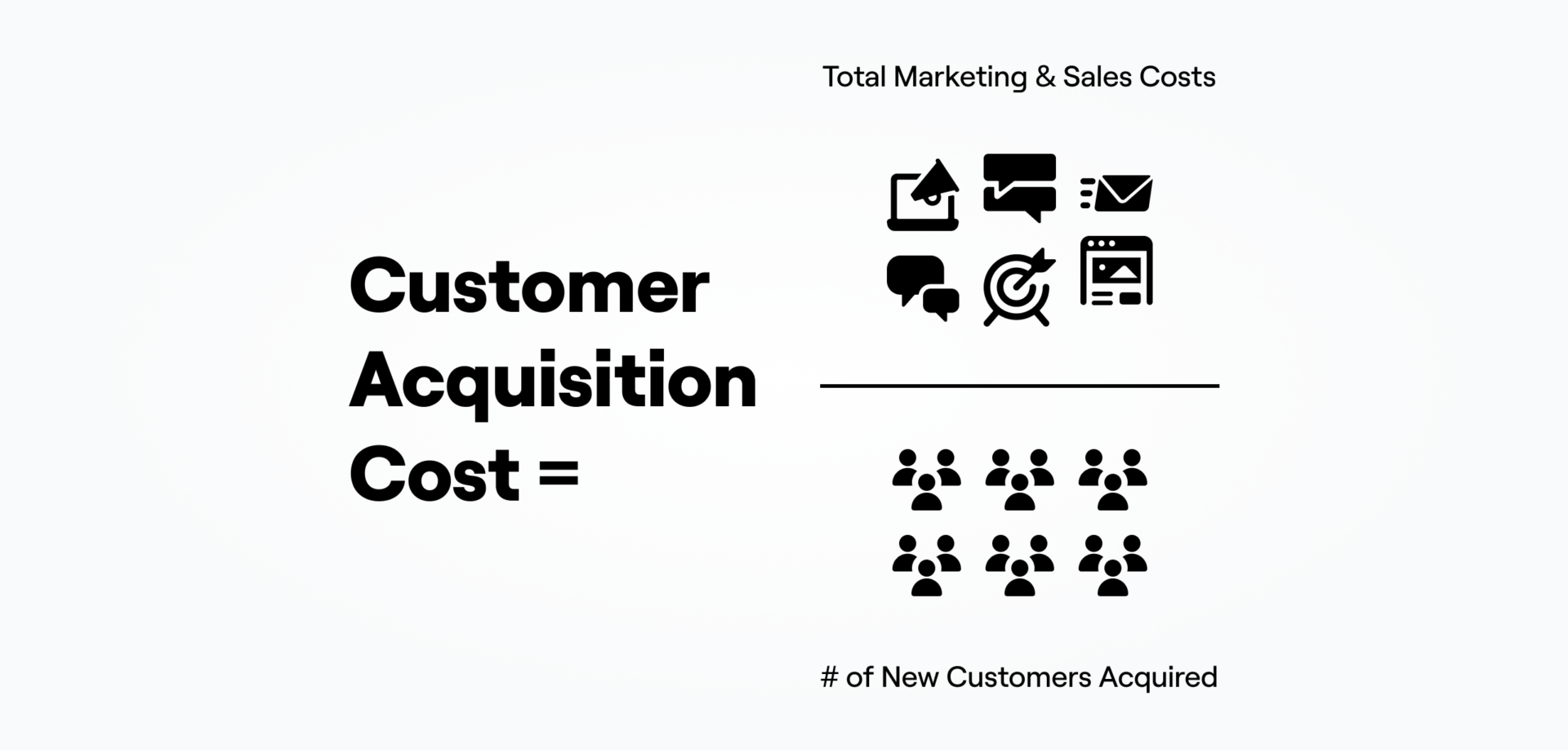
Customer acquisition cost (CAC) represents the total financial investment required to gain a single paying customer. This metric encompasses all activities related to acquiring customers, including both paid and organic marketing efforts, as well as the associated software and staff costs.
The formula for calculating customer acquisition cost is straightforward:
CAC = Total Marketing & Sales Costs / Number of New Customers Acquired
For instance, if your sales and marketing expenses for the month amounted to $9,000, and during that time, you gained 250 new customers, your CAC would be:
$9,000 / 250 = $36
The importance of CAC for Shopify and other ecommerce stores
Understanding your customer acquisition cost (CAC) is vital for e-commerce brands for several reasons:
- Knowing the average amount spent to acquire a customer helps determine if your marketing efforts yield a sustainable return on investment (ROI).
- It aids in making informed decisions regarding your marketing budget.
- Tracking CAC over time provides valuable insights into your marketing efficiency and your capacity to scale campaigns effectively.
Difference between CAC and customer lifetime value
CAC and customer lifetime value (CLTV) are closely intertwined metrics:
- CAC measures the average cost associated with acquiring a new customer.
- CLTV estimates the total revenue a customer will generate over the entire duration of your relationship.
The connection between these two figures significantly impacts your growth potential. For instance, if acquiring a customer costs you $100, and their average spending is about $200, your CLTV:CAC ratio would be 2:1. Generally, experts recommend a ratio of around 3:1 as healthy, while 4:1 is considered excellent.
A CLTV:CAC ratio of approximately 1:1 or below 2:1 indicates that you may be losing money on customer acquisition after accounting for other business expenses.
Is a low customer acquisition cost good?
A low Customer Acquisition Cost (CAC) is definitely advantageous, as it indicates:
- You have a greater likelihood of achieving profitability.
- Your sales and marketing efforts are operating efficiently.
- Your Shopify store has the potential to scale effectively.
However, it's important to consider the context. Reducing CAC at all costs can negatively impact your brand.
For instance, while aggressive, spammy, and overly broad targeting may appear cost-effective, it rarely fosters long-term customer relationships. Some issues linked to excessively lowering CAC include:
- Attracting low-quality customers who contribute minimal revenue.
- Experiencing high customer churn rates.
- Positioning your brand as low-value in the market.
Finding the right balance is crucial for fostering profitable and enduring customer relationships.
Optimizing marketing strategies to reduce CAC
Efficient targeting is an effective strategy for lowering customer acquisition costs. Essentially, it involves understanding your target market those who need or desire your product and allocating your budget to ad campaigns that reach them directly.
Utilizing target audience profiles enables you to focus on individuals likely to convert through your sales funnel. Paid advertising platforms offer detailed targeting options, which enhances precision and, ultimately, improves conversion rates.
As you develop your paid advertising strategy, keep CAC in mind. Ensure you thoroughly understand your target audience and the solutions your product offers, and then concentrate your efforts on the channels where they are most active.
Leveraging organic marketing efforts
While paid ads deliver immediate insights into your sales cycle, incorporating marketing automation can significantly lower customer acquisition costs while fostering meaningful relationships with customers and expanding your brand.
Consider implementing the following organic marketing strategies for your Shopify store:
- Search Engine Optimization (SEO)
- Content Marketing
- Social Media Posting, Engagement, and Community Building
Additionally, utilizing social proof, testimonials, and user-generated content can enhance your organic marketing efforts. Although these strategies may take time to yield results, they are cost-effective, sustainable, and contribute significantly to building consumer trust.
Can CAC be reduced?
In recent years, the average Customer Acquisition Cost (CAC) has risen across various industries. Factors contributing to this increase include data privacy regulations and heightened competition in digital marketing and social media platforms. However, with the right strategies, you can effectively lower your customer acquisition costs.
Here are some essential tips to consider:
- Refine your targeting to ensure that only interested individuals see your ads.
- Analyze your marketing channels and reallocate your budget to the platforms that deliver results.
- Create high-quality content marketing to engage and attract potential customers.
- Utilize referrals or adopt a product-led growth strategy.
Additionally, workflow automation apps like Mavenbird can assist in reducing customer acquisition costs by automating email marketing campaigns, providing actionable insights, and minimizing operational expenses. Mavenbird equips you with the data needed to make informed, data-driven decisions that can lower your customer acquisition costs.
What is low CAC?
The definition of a low Customer Acquisition Cost (CAC) varies based on several factors, including:
- Industry
- Product price
- Business model
As mentioned earlier, a CLTV:CAC ratio of 3:1 is generally considered sustainable. To determine if your CAC is low, it's essential to benchmark against relevant competitors. Here's how you can do that:
- Calculate your CAC.
- Gather industry data and benchmarks.
- Compare your results against similar Shopify stores.
Improving website conversion rates
One of the most effective ways to reduce customer acquisition costs is by enhancing your Shopify store’s conversion rate. By optimizing your store, you can generate more sales from existing traffic, minimizing wasted ad spend and marketing costs as fewer customers leave without making a purchase.
Here are some key strategies to consider:
- Ensure easy navigation, fast-loading pages, and detailed product descriptions and images.
- Utilize clear, colorful, and well-crafted calls to action (CTA).
- Make your store mobile-responsive.
- Conduct A/B testing on all your creatives and copy to identify the most effective options.
Using data analytics to drive down costs
Data analytics offer valuable insights into the customer journey. Tools like Google Analytics can help you uncover important information, such as:
- Identifying customer segments that yield high Customer Lifetime Value (CLTV).
- Determining which marketing channels are effective and which are not.
- Measuring revenue attributed to different stages of the customer journey.
- Spotting bottlenecks within the customer journey.
Additionally, predictive analysis tools leverage AI and machine learning to help you understand potential customers better. For instance, these tools can assist in creating profiles for targeted digital marketing. They can also enhance retention efforts by identifying consumer behavior patterns that predict customer churn or receptiveness to cross-selling and upselling opportunities.
Customer retention as a strategy to lower CAC
Customer retention is a vital strategy for businesses aiming to lower customer acquisition costs. By delivering value and fostering long-term relationships, you can unlock several key benefits:
- Reducing your customer churn rate, which lessens your reliance on marketing spend to generate revenue.
- Maintaining more of your existing customers leads to a higher average Customer Lifetime Value (CLTV).
- Acquiring customers is more costly than retaining them, and through effective cross-selling and upselling, retention efforts can yield an impressive return on investment (ROI).
- Enhanced retention increases the likelihood of referrals and word-of-mouth marketing, as loyal customers become advocates for your brand.
Collaboration and partnerships for cost-efficient acquisition
There are numerous creative methods to reduce customer acquisition costs:
Partnerships
Collaborating with complementary brands or influencers can help you attract paying customers without significantly increasing your CAC. Key benefits include:
- Expanding your reach by tapping into your partner’s audience.
- Sharing the burden of marketing and advertising expenses.
- Enhancing trust and credibility through strategic partnerships.
Affiliate Marketing
Affiliate marketing is an effective way to outsource content creation, SEO, and audience targeting to trusted voices in your niche. The advantages of affiliate marketing include:
- You only pay for marketing that leads to sales.
- Affiliate marketers handle the task of attracting your ideal audience.
- It is easy to scale your affiliate marketing efforts.